Every custom seal is CNC-machined from billet stock in one of 50 grades: polyurethanes, PTFE compounds, rubbers and engineering plastics. Search by temperature or approval below. Not sure which to pick? Describe your application and our team will recommend one.
Material families
What each material is good at
An overview of each material family. The bars show the continuous operating range on a −200 °C to +260 °C scale. A plus sign marks a strength and a minus sign a limitation. Grades within a family can differ, so always check the grade itself.
Polyurethane
PU / TPU
High mechanical strength and outstanding abrasion resistance, available across a wide hardness range. The most widely used material for hydraulic seals.
-30 °C+135 °C
Mineral oils, greases, water/oil mixtures
Aliphatic hydrocarbons
Very good ozone & oxidation resistance
High extrusion resistance
Polar solvents and aromatics
Brake fluids
Acids and alkalis
Typical uses: Rod & piston seals, wipers, static seals, diaphragms · See grades →
PTFE compounds
PTFE / TFM
Resists acids, bases, alcohols, ketones, fuels and oils. Low friction and high wear resistance make it right for high speeds. Fillers tune it to each job.
-200 °C+260 °C
Bronze: mineral hydraulic oils, high pressure, low wear
Carbon-graphite: dry running, water & oil, pneumatics
Glass + MoS₂: water-based fluids, high pressure
TFM: low deformation & permeability
Not elastic: usually paired with an elastomer energizer
No grades match. Try widening your filters, or ask our engineers. We may be able to source it.
Temperature ranges are continuous operating limits for the material. Actual limits also depend on pressure, speed, media and seal design. Rows marked “Ask us” are being confirmed. Datasheets are available on request.
Storage & shelf life
Keeping spare seals in good condition
Ordering spares in bulk? Store them well and they will last for years. These are the standard recommendations for storing elastomer and polymer seals.
Storage conditions
Store at 5–25 °C; warm to above 20 °C before fitting
Relative humidity at or below 60%
Keep sealed in polyethylene bags, free of load
Keep away from sunlight, UV and ozone sources
Keep away from solvents, oils, copper and manganese
Shelf life by material (ISO 2230)
Shelf life
Materials
5 years
PU / TPU, TPE, POM, PA
7 years
NBR, HNBR
10 years
FKM, EPDM, Silicone (VMQ)
Unlimited
PTFE
Semi-finished stock
Tubes, rods & billets
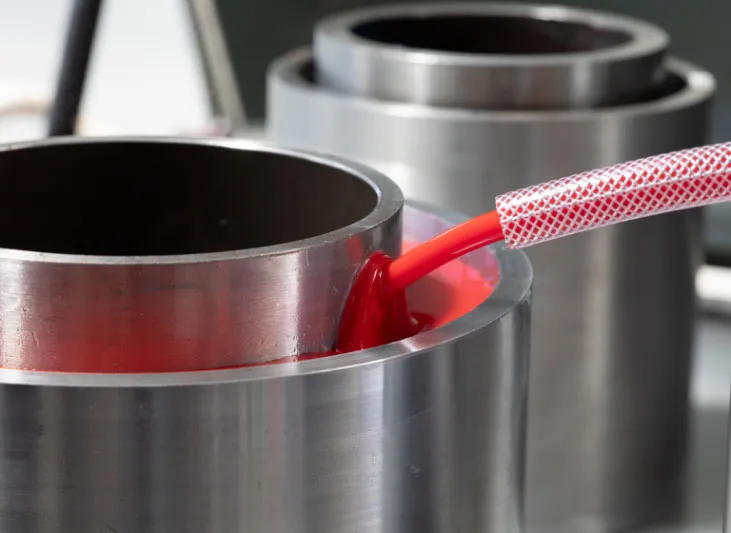
Machining from billets that are already in stock means no mould and no tooling wait. Do you machine seals yourself? We also supply the semi-finished tubes and rods, made from 100% European-origin raw materials.
Cast polyurethane billets
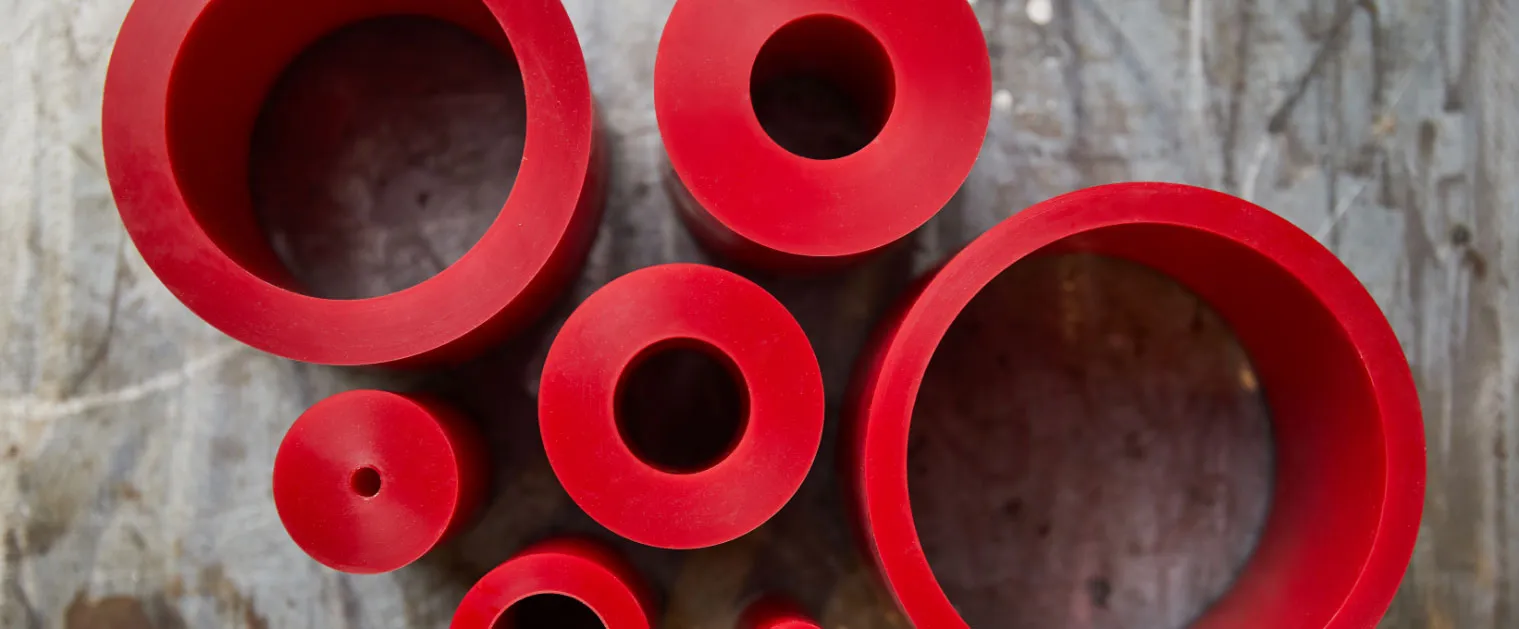
High-performance cast PU in 94 Shore A and 60 Shore D. Both offer high extrusion and abrasion resistance, and the 94A grade is also hydrolysis resistant. Ideal for lathe cutting rod seals, piston seals, wipers and static seals.
Outer Ø
25–534 mm
Inner Ø
solid to 483 mm
Length
150 mm
Moulded PTFE rods & tubes
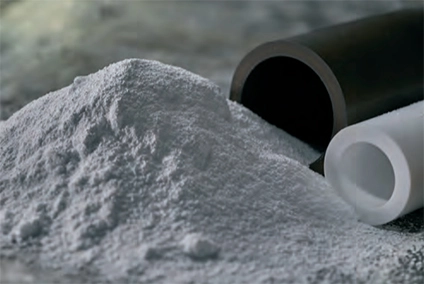
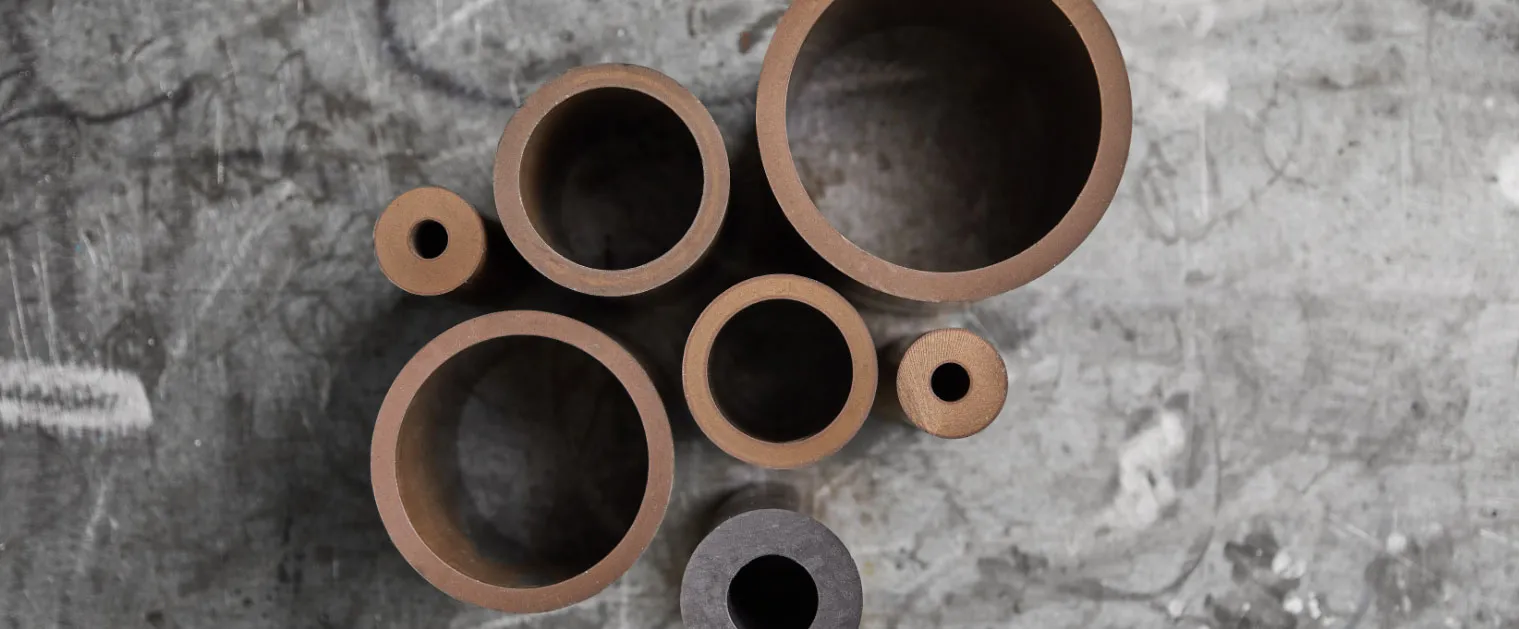
Standard range in 40% bronze-filled PTFE (extrusion resistant, low friction) and 25% carbon-graphite PTFE (self-lubricating, suits dry running). Other PTFE grades are available on request.
Rods Ø
30–150 mm
Tubes OD
40–230 mm
Length
145 mm
Composite materials
Guide rings, guide tapes, tubes and rods in composite materials, used mainly in hydraulics. Phenolic composites are used for guides that carry high loads.